After a few months with the Fitbit Air, I think I can conclusively say that it’s the best exercise and health tracker I have ever used.
And I’m saying that while realising it’s not a particularly good exercise and health tracker.
I have used multiple Apple Watches, multiple Garmin watches, and many other trackers from the likes of Amazfit and Ultrahuman over the past few years. And all of them have merit alongside significant disadvantages.
What I have realised, however, is that not one of them offers health tracking that could be considered truly useful.
Since being diagnosed with ME/CFS, I have been on a bit of a quest to understand what causes my symptoms. I have tried the Visible solution, which proved to be very poor for me. I have tried multiple symptom collation apps, and I came out of all of them thinking these just don’t work.
It transpires that the reason none of them worked was not necessarily because of the solutions themselves, but because of me and how my body works.
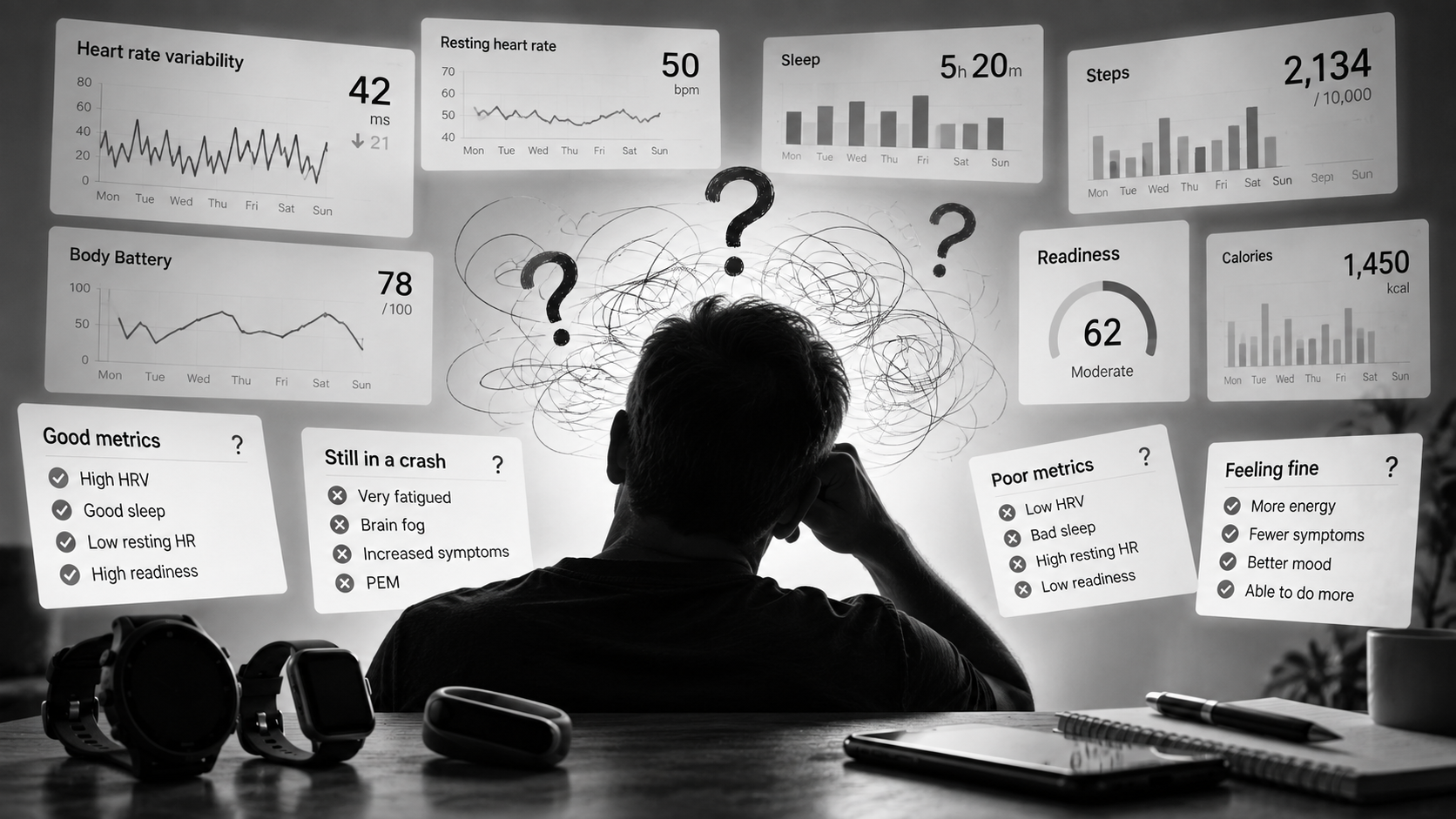
My heart rate variability can be 42 one day and 21 the next and tends to average out around 30. So that immediately makes me suspicious of how these devices track that particular metric, and in particular on the Fitbit Air it really does vary to wild degrees, which isn’t particularly helpful.
What I have found, however, is that no matter what my heart rate variability does, no matter what my resting heart rate looks like, no matter how any of the other metrics stack up, they never ever relate to my symptoms.
I can be in a very big crash for two weeks in a row with some of the best health metrics I have had over the past two years, and then I can be feeling fine with really poor metrics.
And on top of that, I’ve had ChatGPT build an app so we can analyse the data and look for trends to see what I’m doing wrong and what I could do to try to alleviate the symptoms and ensure that my illness does not get worse.
The conclusion after many, many months of tracking is that there is no trend whatsoever.
There is a slight leaning towards more sleep and less upright time giving me fewer symptoms. But even that is hard to track because with ME/CFS you get something called post-exertional malaise, which means that if I overdid it today, I may not have a crash until tomorrow or the day after or even the day after that.
So you do have to look over long periods of time.
But even then, periods of long upright time, more steps and worse sleep haven’t always translated to heightening symptoms over the next few days.
So in terms of measuring a chronic illness, not one of these trackers has proved to be even close to useful for me.
If I ignore the chronic illness side and think about these trackers as devices used for monitoring exercise, monitoring recovery and for general health tracking, I do think they have a place.
But after many years of checking my metrics every day, I have come to realise that we are really dealing with a bunch of algorithms here that spew out tons of data, of which very little is useful.
When you think about it, knowing that you only had five hours’ sleep last night is not necessarily going to affect what you do the next day. Knowing that you have a higher recovery score or a lower recovery score may affect how you exercise.
But I don’t know anyone who can conclusively say that the recovery metrics they see actually match the world they live in.
I saw this with the Garmins, which use Body Battery, and that’s built on the amount of sleep you’ve got, resting heart rate, heart rate variability. And it was all over the place for me.
Now it may just be that that’s just the way I am. And whilst all of my data over a long period of time would suggest I’m very healthy and that there are no issues at all, the fact of the matter is none of the sensors or the algorithms sat on top of those sensors were able to offer me anything of any use.
It always came down to how many steps I did, and if I could keep up a good amount of steps I could keep my weight under control and I could feel a bit healthier, and at times just monitoring the calories I’m eating and how much fibre and carbs and fat especially.
Those things sort of matter.
But ultimately, I could have done all of that without any of those devices on my wrist.
And it’s because of that conclusion that I feel that the Fitbit Air is probably the best device I’ve ever used in terms of tracking health and exercise metrics.
And it’s only for one reason.
I simply never think about it.
If I go for a walk, which is sadly quite a rare occurrence these days, the Air will track it. I don’t have to press anything. I don’t have to do anything to let it know that I’m going for a walk.
When I go to sleep, I don’t even notice it. It’s so light and the band is so comfortable that it just sits on my right wrist.
And that’s it.
I check the numbers once every few days. The data is used to track my symptoms and to see if there’s anything physical going on that could explain why I might be having a bad period or why I’m having a particularly good period.
But overall, it comes down to the fact that it’s completely invisible when worn.
Once a week I put it on the charger for 25 minutes or so and it will get me through to the next weekend. I never worry about the battery.
There’s no screen to look at. Everything’s just held in the Google Health app on my iPhone and I’ll look at it when I want to.
Maybe it would be the case that if I was running, exercising and having a normal day like most people do, that it might not be enough for me.
But what I would say is that it really is good enough for 95% of people.
I get the appeal of something like the Apple Watch, where you can have your notifications come through, where you can set reminders, potentially respond to messages, even take phone calls.
I do get the appeal of that, but it is quite an interruption to your life. There’s a lot of charging needs doing during a normal week, and it really has to be your watch.
There’s no two ways around that.
But I’m not convinced about all the health stuff on top of it and how useful that is in the real world.
So yes, the Fitbit Air, I’ll say it one more time, is the best fitness device I’ve ever used, even though it’s not particularly good.
It’s strange how we humans work, but I think the trade-off here is the not particularly good functionality is good enough that it easily outweighs the fact that the device itself is completely invisible.
So I feel like I’m getting all that data for nothing.
With other devices in the past, I’ve always felt like the trade-off is having to wear a relatively big, bulky device on your wrist, something that commands you to look at it, something that will alert you on occasion and something that you do need to charge quite often.
The fact that none of this applies to the Fitbit Air is why it wins for now.
Categories: Articles, Fitness, Fitness Trackers, Health, Smartwatches


It really sounds like it’s working well for you!
LikeLike
It’s good to a point. Do think I could be perfect to fine with none at all now though.
LikeLike