
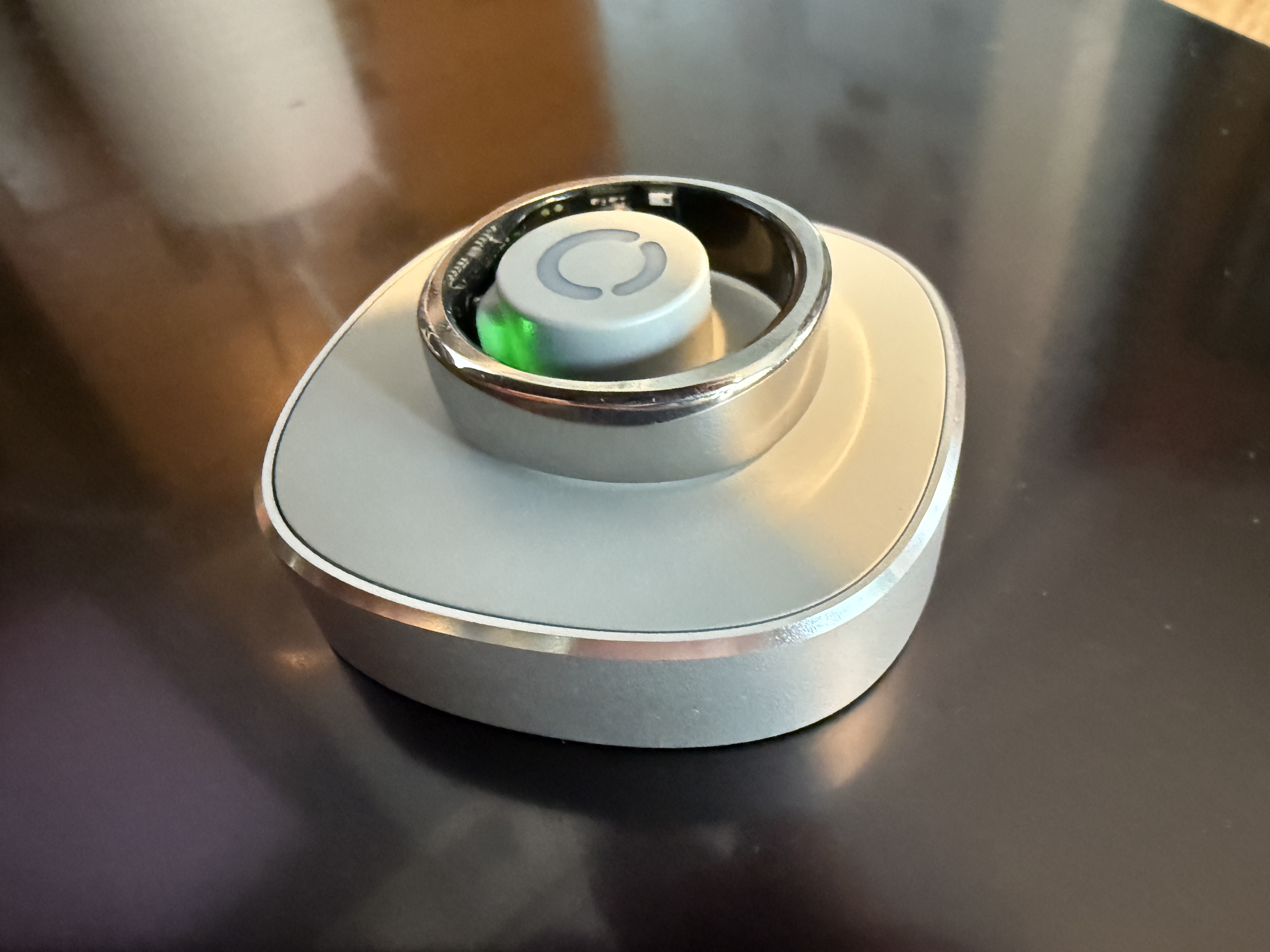
I have tried 2 smart rings so far and neither of them latest long; the Oura Gen 3 and the Ultrahuman Ring AIR.
They both suffered from a variety of problems, in my view, but by far the biggest downside was how they felt to wear. Neither was large by any means, but they were just a little too thick on the sides and thus they were noticeable at all times and the sensation of not being able to put my fingers together was strangely maddening.
How does it feel?
The RingConn Gen 2 Air is, surprisingly, a different beast altogether. It is of course circular, but with a touch of squareness which allows it to sit more comfortably on the finger. Most importantly of all is the fact that the sides are very slim and this is the reason why it feels like a normal ring when worn.
I cannot express how important this is because this is the very first fitness product I have worn that actually feels invisible in use. Genuinely, it is so light and well designed that you will not notice it after a day if you have taken the time to use the sizing kit (£2.99) before you buy.
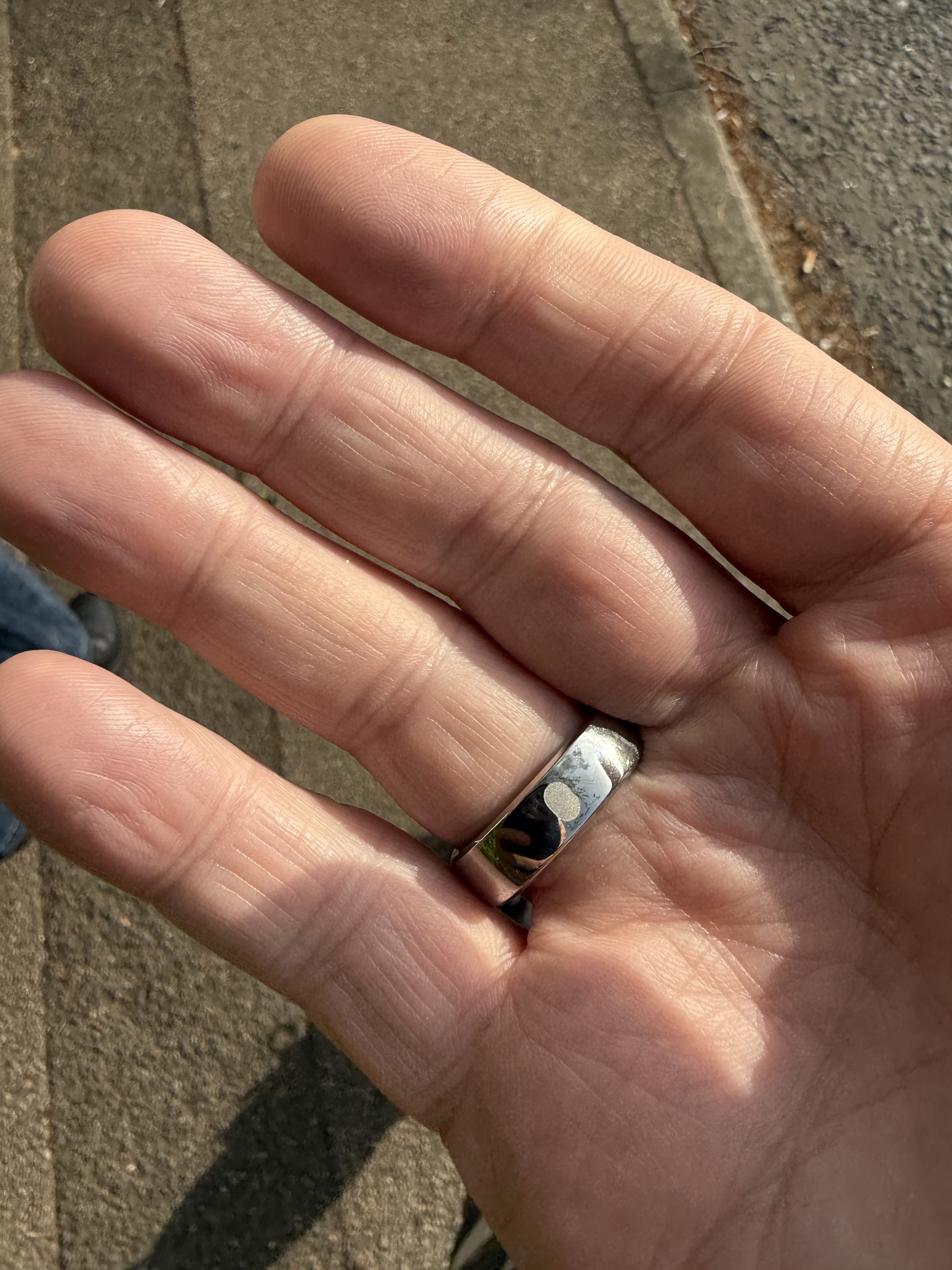
The invisibility of the product is a big advantage because it means that if only some of features work well, you are more likely to keep using it because there are no practical barriers to daily use.
This invisibility is extended by up to 12 days of battery life between charges. That’s more than 6 times longer than the Apple Watch Ultra and for many is 12 times longer than the Series 10. Even compared to other smart rings, this is a very impressive number.
Also, it is 2 to 3 grams in weight (depending on the size you need) which is again virtually invisible.
Build quality
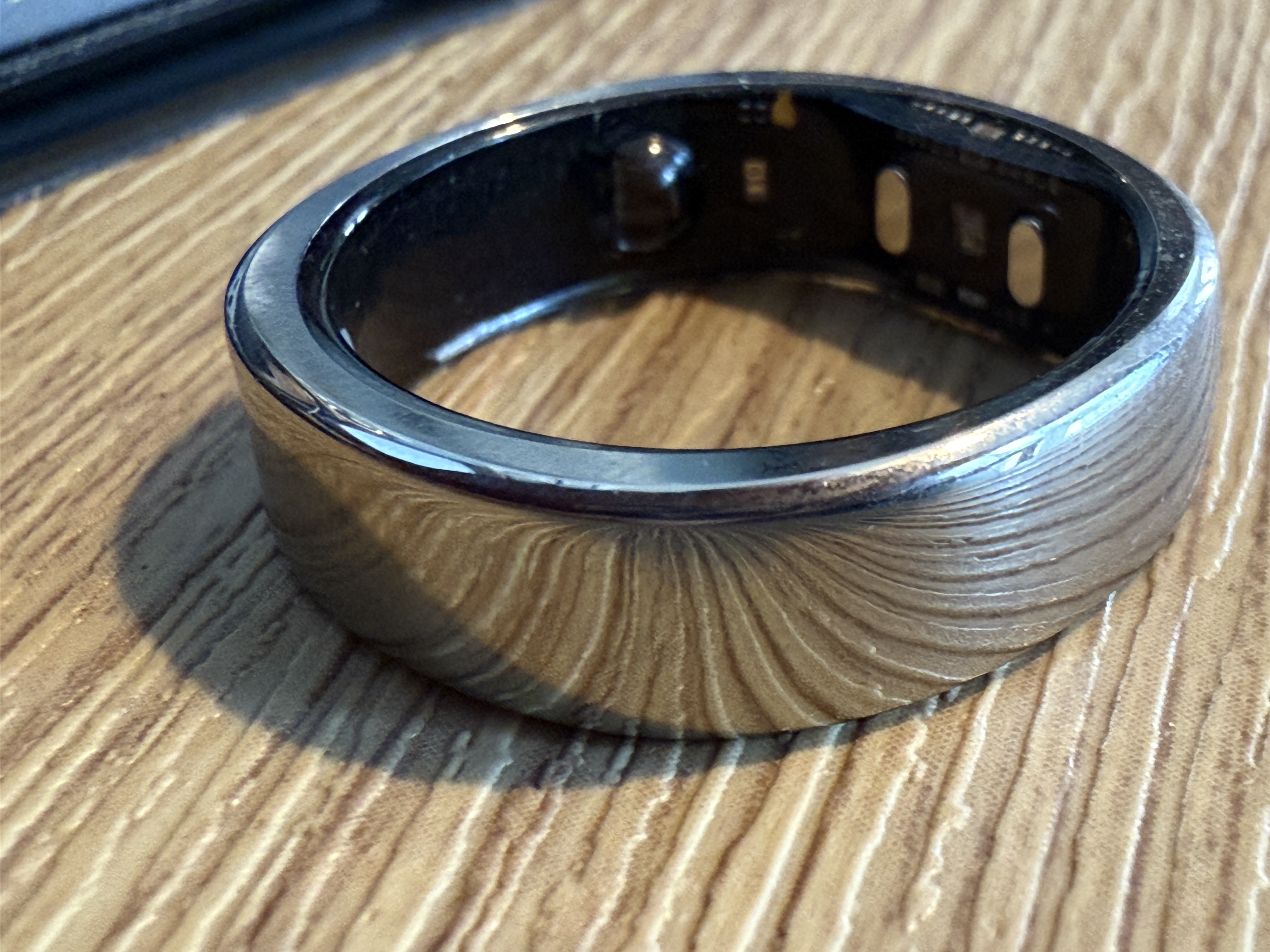
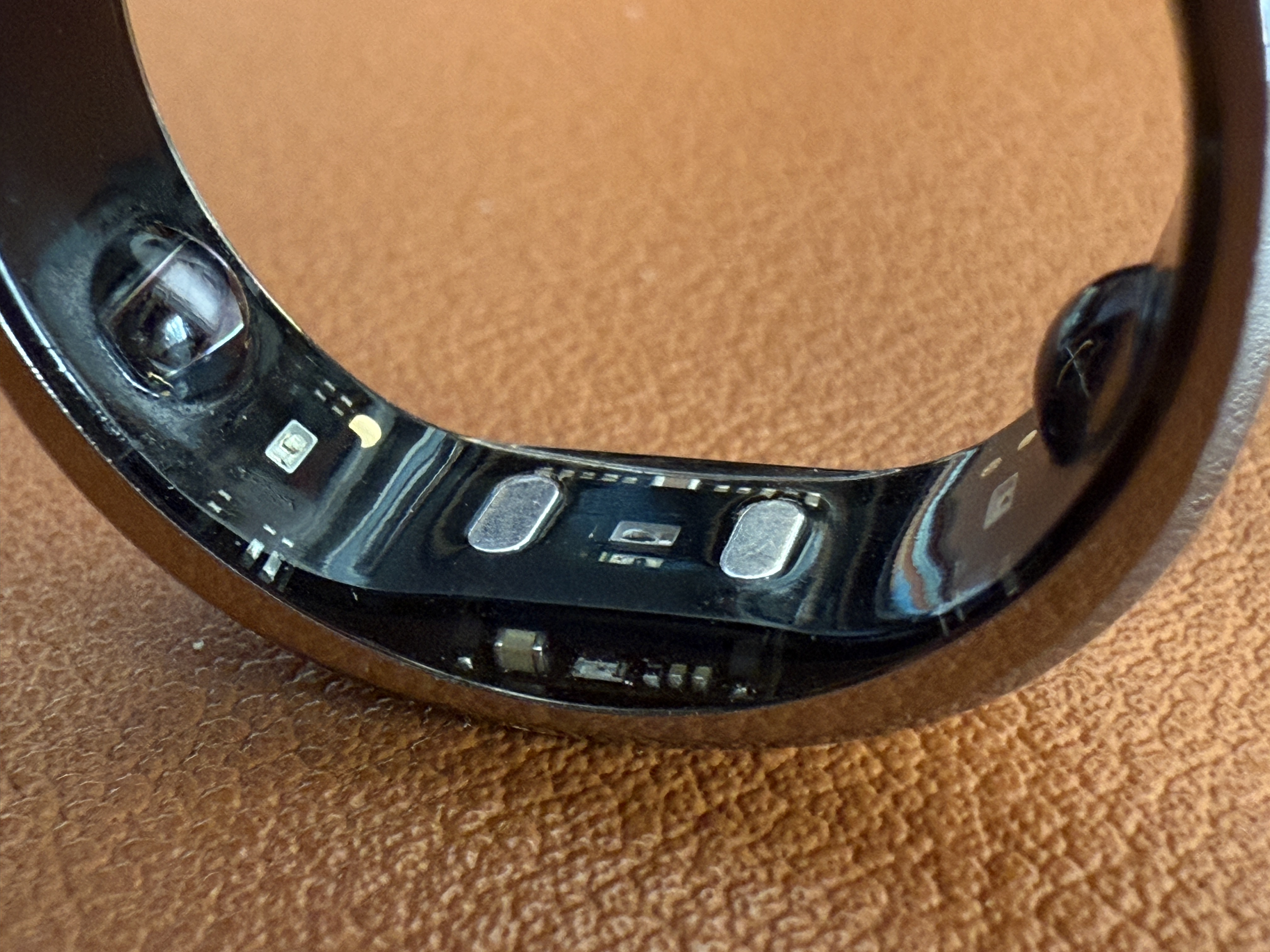
The ring feels good enough and is built to an adequate standard. You can see that finishing is not the highest priority when you look closely at the sensors which have some rough edges. The sensors are not visible in use though, but the ring itself is and there is a sense of cheapness in how it looks. It is supposed to be made of premium stainless steel which may be true, but it does not look or feel like steel, and it never gets cold which is a curiosity. I note that the more expensive Gen 2 is titanium alloy with PVD coating and reports suggest it looks and feels more premium.
What do you get?
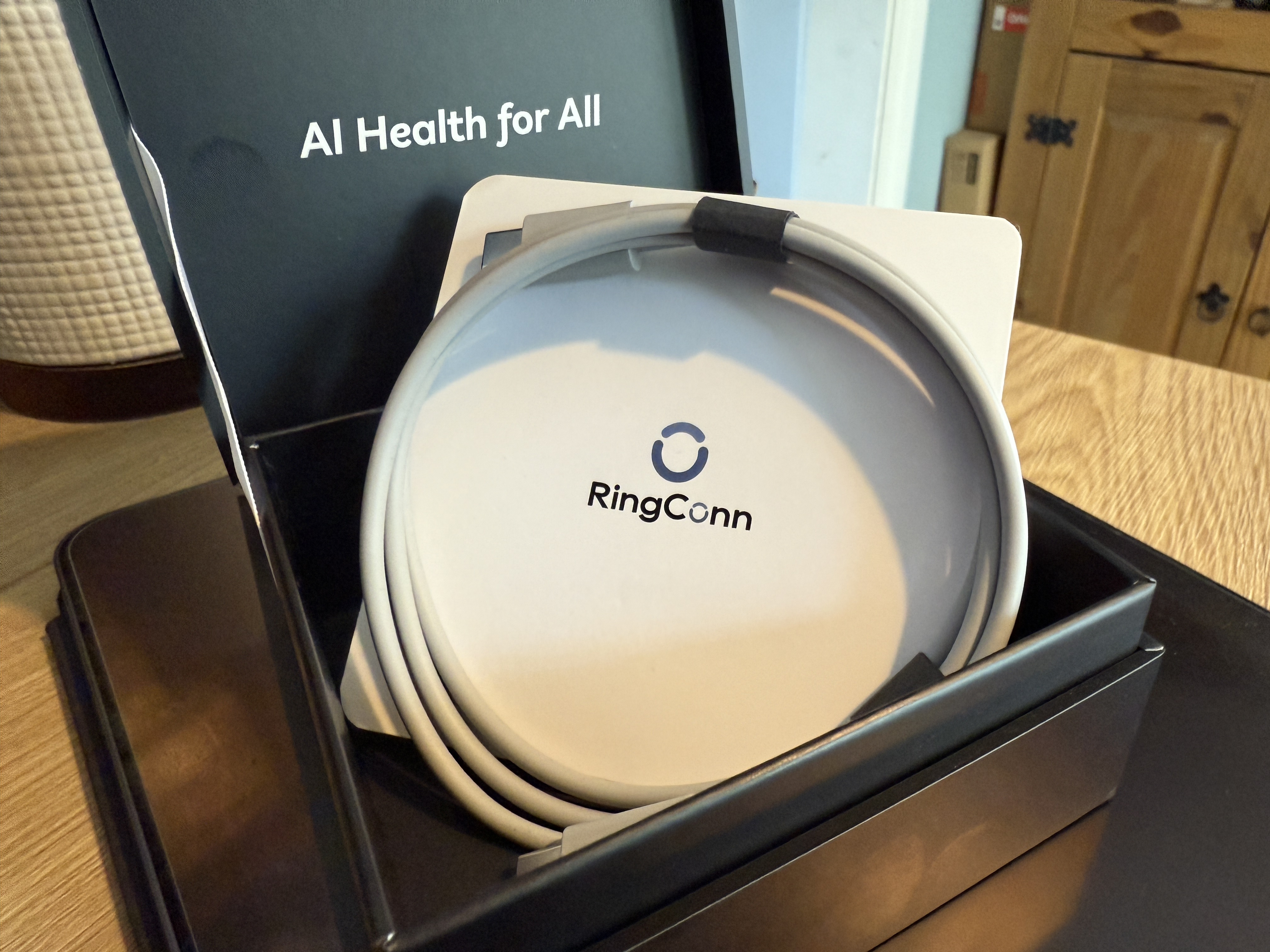
Not a lot actually, but all that you need. A braided USB-C to USB-C charging cable, a charging stand which is very smart and which would look consistent alongside any Apple products you already own. You also get the usual instructions which you will not read and a cardboard box. I never mind minimal packaging because it only sits on a shelf anyway.
How well does it work?
This is the big question with smart rings because they offer what would appear to be a huge variety of features in a tiny form factor. A quick summary of the features available in this product is available here.
If you have no other device to compare against you are kind of blind as to how accurate your smart ring is, but I have an Ultra 2 and a Fitbit Luxe to compare against which is useful.
Overall the step counts were largely similar with the Ultra 2 sitting in the middle each time; the Fitbit is always higher and the RingConn always lower, but they are in the margin of error. As long as they are consistently recording steps it should not matter because you can easily track if you are improving.
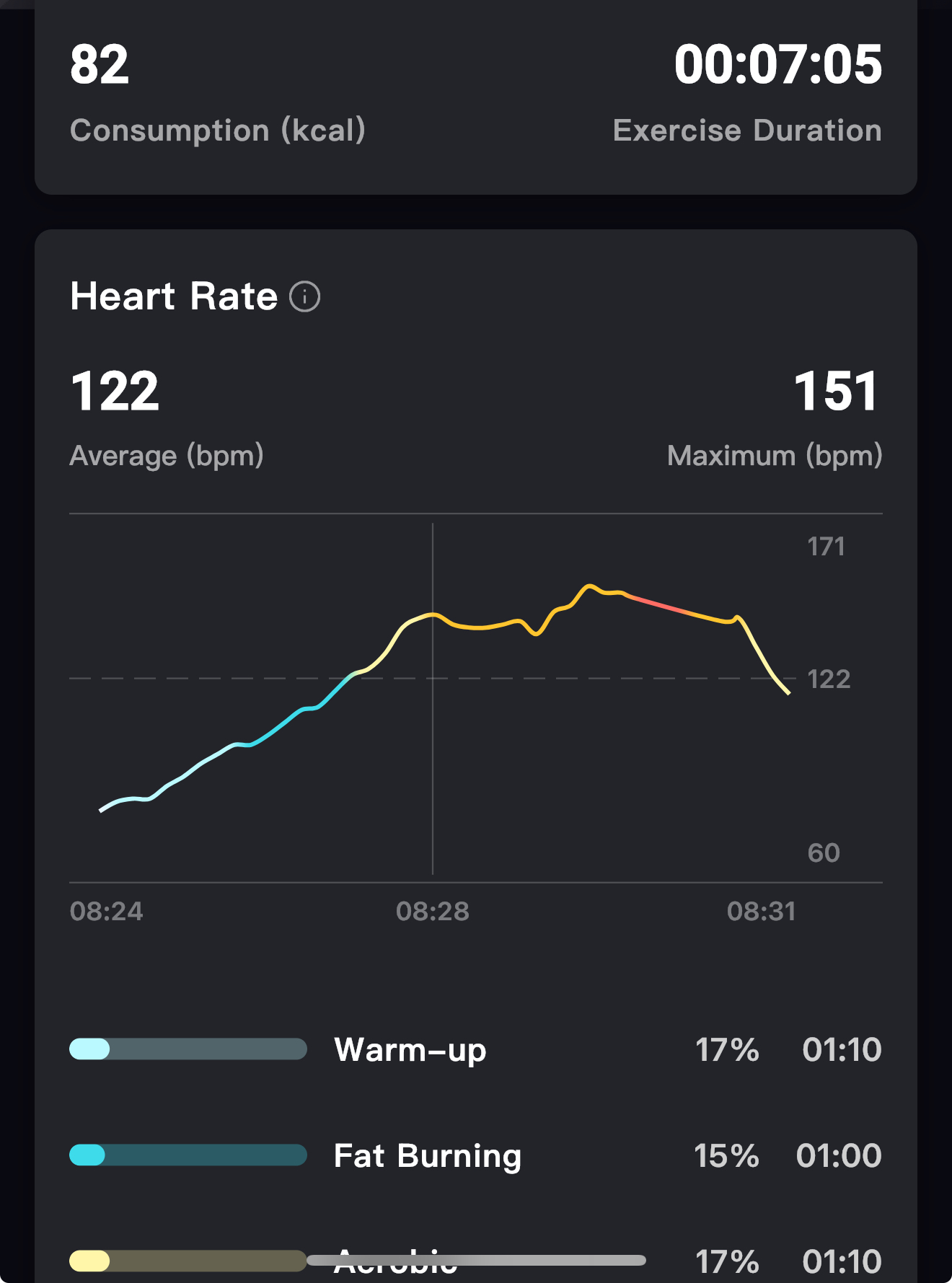
Heart rate is an important metric and I have a lot of faith in the Ultra 2. A few months ago I had an exercise test in the hospital and among other devices, a heart rate monitor was strapped to my chest. It was surprising to see the heart rate on the hospital screen perfectly match what I could see on my Ultra, and I mean perfectly. Literally the same numbers going up at the exact same time as I was pushed harder throughout the test.
The RingConn, however, has a problem here. On each indoor run I was seeing numbers above 150 for my heart rate which is about 50% out. If my heart rate was +150 I would be on the floor- it’s a long story and it relates to the reason I was having the hospital test, but my heart rate has not gone above 120 no matter what exercise I am doing ever since I have worn fitness trackers. It has been about 10 years of tracking and I have never seen this. To add context, when I saw the high heart rate for the first time I put my Ultra on my left wrist and the Fitbit Luxe on the right wrist. This is what I saw-
Ultra 2 – 92bpm
Fitbit Luxe – 95bpm
RingConn – 152bpm
You can see the problem just in those numbers and there is evidence to suggest the form factor is the issue here.
Strangely, the heart rate readings are fine on an outdoor walk so my first thought was that there was a connection issue with the skin while running. Sadly trying different fingers with a tighter and looser fit made no difference- the heart rate numbers were still far too high.
This doesn’t matter to me too much if the readings for the rest of the day are fine, but it does dent my confidence in how well the device works. Because of this I spent some time checking the HRV, SP02 and sleep stats which were pleasingly close to the Ultra which I have some faith in.
I believe that smart rings are OK for general health tracking, but poor activity trackers and I am not sure that this is an easy problem to fix. Since the birth of digital step tracking, the methods used are still somewhat antiquated and no matter what device you are using you should only expect estimates. It is far too easy to get bogged down in what appear to be ‘exact’ numbers, but the reality is that none of these devices are providing exact data, and in the case of smart rings the exactness is a step further away.
The app?
I was surprised by the presentation of the app and way it displays a lot of data in a logical and easy to understand way. It does not get too busy showing data that is largely meaningless and focuses in on the major statistics that you need to know. There is AI integration which is scarily poor and so basic that only the ‘artificial’ word is accurate.
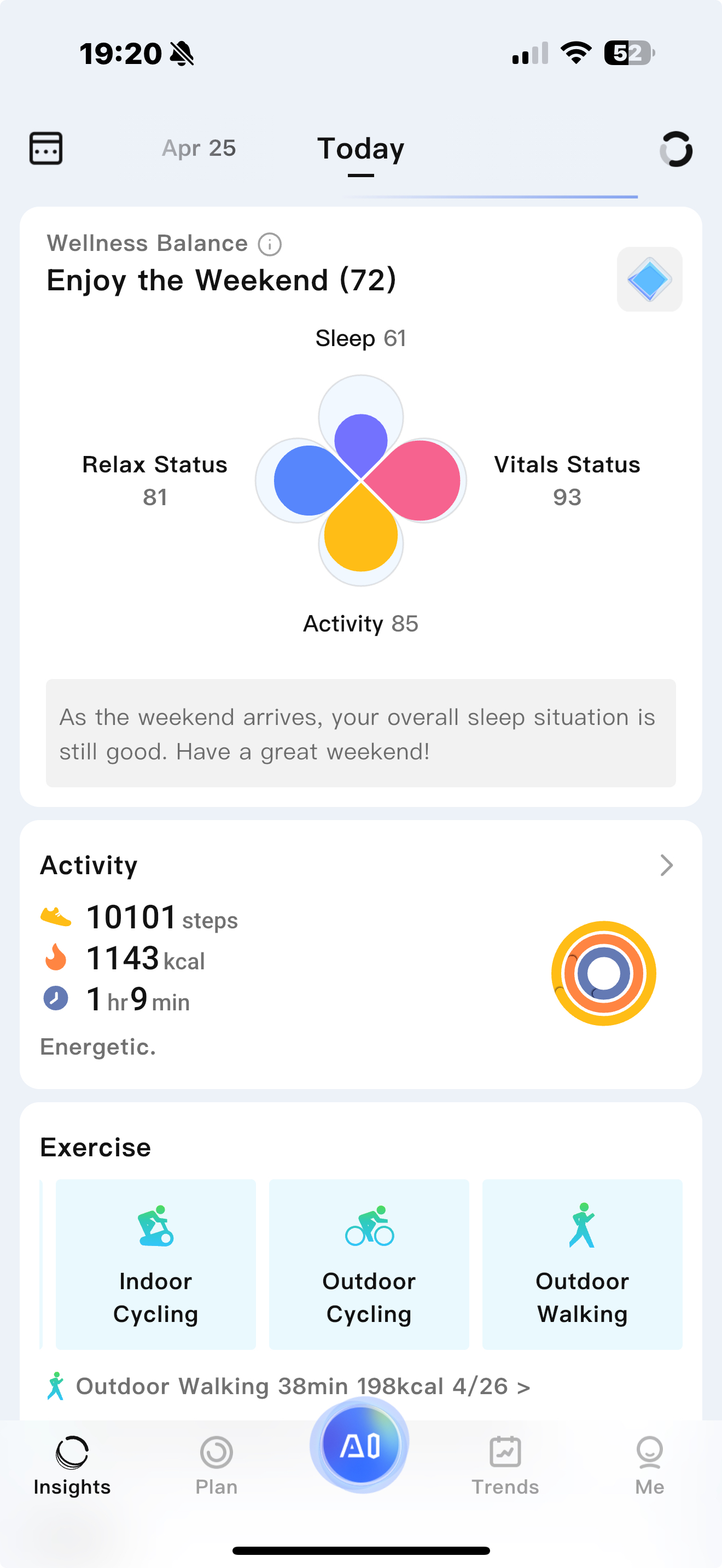
You can integrate with Apple Health to have your steps counted and your sleep stages will also be shown in Health albeit with some delay as the two sync together far away from real time. There is, however, little integration from the RingConn app to other services due to its closed nature- hopefully this will change in the future.
There are no indicators on the icon to guide you, but some fairly basic widgets are available which would just about well enough. Overall I am happy with the app, but hope for many developments in the future to make it as full featured as it should be.
Data and privacy?
An obvious concern is that Shenzhen Ninenovo Technology Limited is Chinese and while the data collection is what would be expected for a fitness solution, there is always the possibility that the Chinese government could demand access to your data in the future. Our data is rarely private, whether it is with Google, Apple or anyone else, but for those of us in the West the Chinese factor weighs heavy. Then again, China or Trump- who do I trust the least? I found this which adds some reassurance- ‘Personal data transmission, storage, and analysis are all strictly encrypted and processed on AWS servers located in the UK.’
Conclusion
Part of me feels that fitness and health tracking on any product is more hassle than the benefits can offer. You are dealing with so much data that it would take forever to analyse and most people will only look at steps, sleep stats and some health aspects such as heart rate and vitals. If, however, you do want to get an accurate view of your body and how it is working for training or a specific health issue I would suggest a wrist worn device, and more specifically an Apple Watch or a Garmin.
For people like me who like to wear real watches the choices are limited. I could look odd and double wrist a watch and a smart watch. I could strap a smart watch to my arm and lose the advantages of the screen or I can wear a smart ring.

The choice is yours as to what you need and what works well for you, but I would say that for the majority excellent accuracy is not of paramount importance as long as consistency is present.
For £239 with NO subscription, the Gen 2 Air is good value compared to the competition and my healthy scepticism of smart ring accuracy means that a subscription service is out of the question anyway.
Is this the best smart ring I have used to date? Yes.
Is it good value? Yes.
Does it ever get in the way? No.
Am I impressed? Yes?
Will I keep this smart ring? Maybe.
Will it replace my Ultra 2? Maybe.
I cannot believe I am saying maybe to the last question, but that does highlight how good this smart ring really is. It has fitted into my days in a sneaky manner and does a lot when you consider how invisible it is in use. I suspect the main downside of it is the fact it is a smart ring rather than the product itself. I don’t think the technology is available yet to make any smart ring a good fitness tracker even if the health tracking is not too bad.
Categories: Articles, Fitness, Fitness Trackers, Health, Product Reviews
 McGST
McGST 
I’m surprised you are giving it a maybe when the heart rate is so far off, but I read your logic. Convenience is a big factor.
LikeLike
It’s doing it on running in the same position which is odd. Outside of that it is roughly in line with other devices. One major bonus is how easy it is to start a workout on the iPhone. Wish the Apple Watch did that.
LikeLike
I had a very bad experience with RingConn.After placing my order, there were no updates at all. Apparently there was an issue with the address on their side, but they never contacted me about it. If I hadn’t reached out myself after a week, nothing would have moved forward.The shipping was then delayed significantly — much longer than originally promised. When I asked for a resolution or compensation due to the delay, they didn’t offer anything. Just a late shipment.Customer support felt like low-quality AI responses — not helpful, not specific, and not addressing the actual issue. Communication after ordering was basically zero.Be careful when ordering. If you decide to purchase from them, I strongly recommend contacting support immediately to confirm everything — otherwise, you may not hear from them at all.
And since 14th of february I have not recived my refund still “fighting” with them. As they are dellaying the refund process. I would avoid this company and I went with Samsung Ring instead and Im happy camper.
LikeLike