
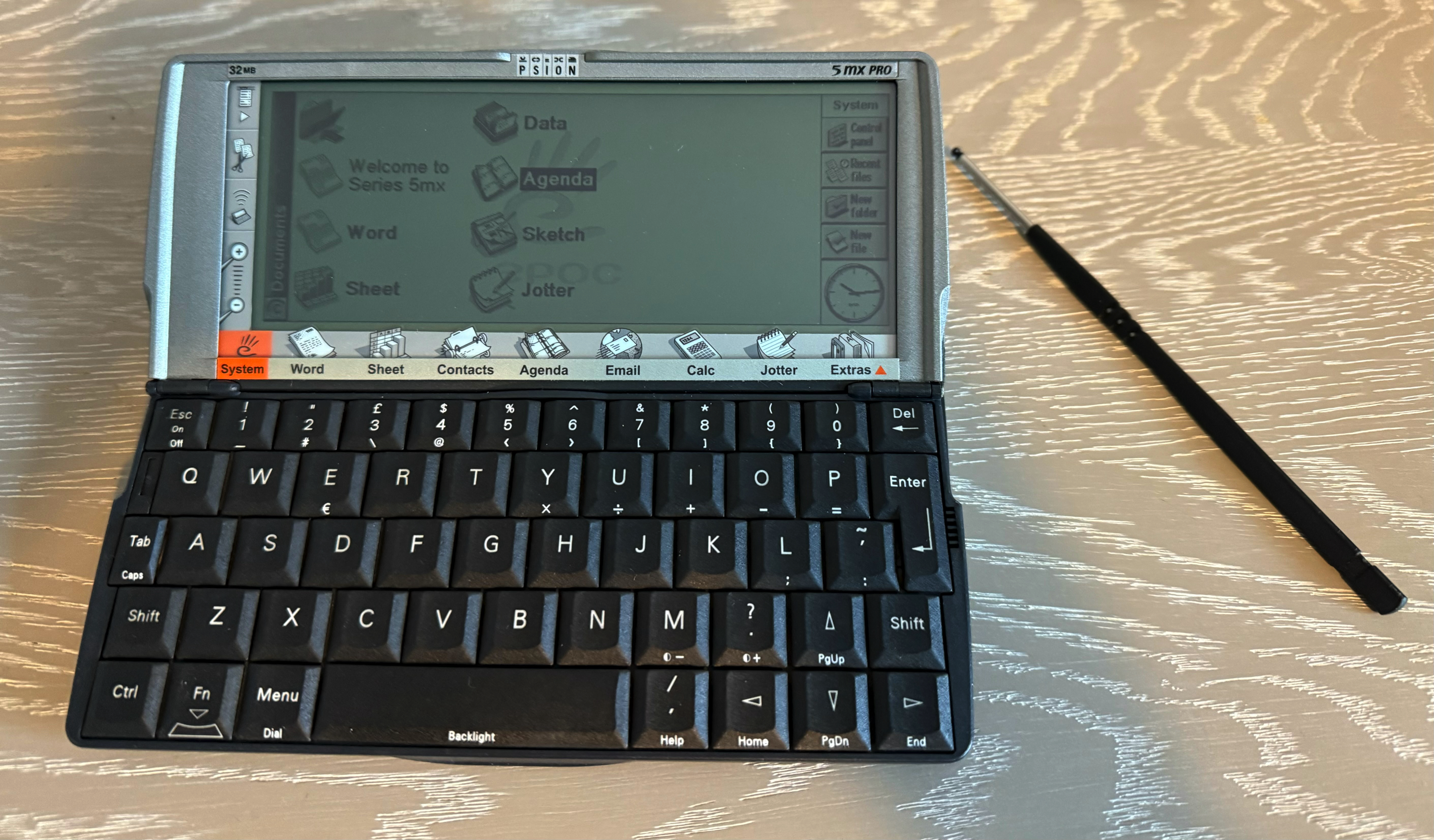
As I look back at the scores of mobile devices I have owned over the past 30 years, the Psion 5mx is number one for me. It represents the ultimate high point for the Psion brand and was one of the last models the company built before a few unfortunate missteps took their tole.
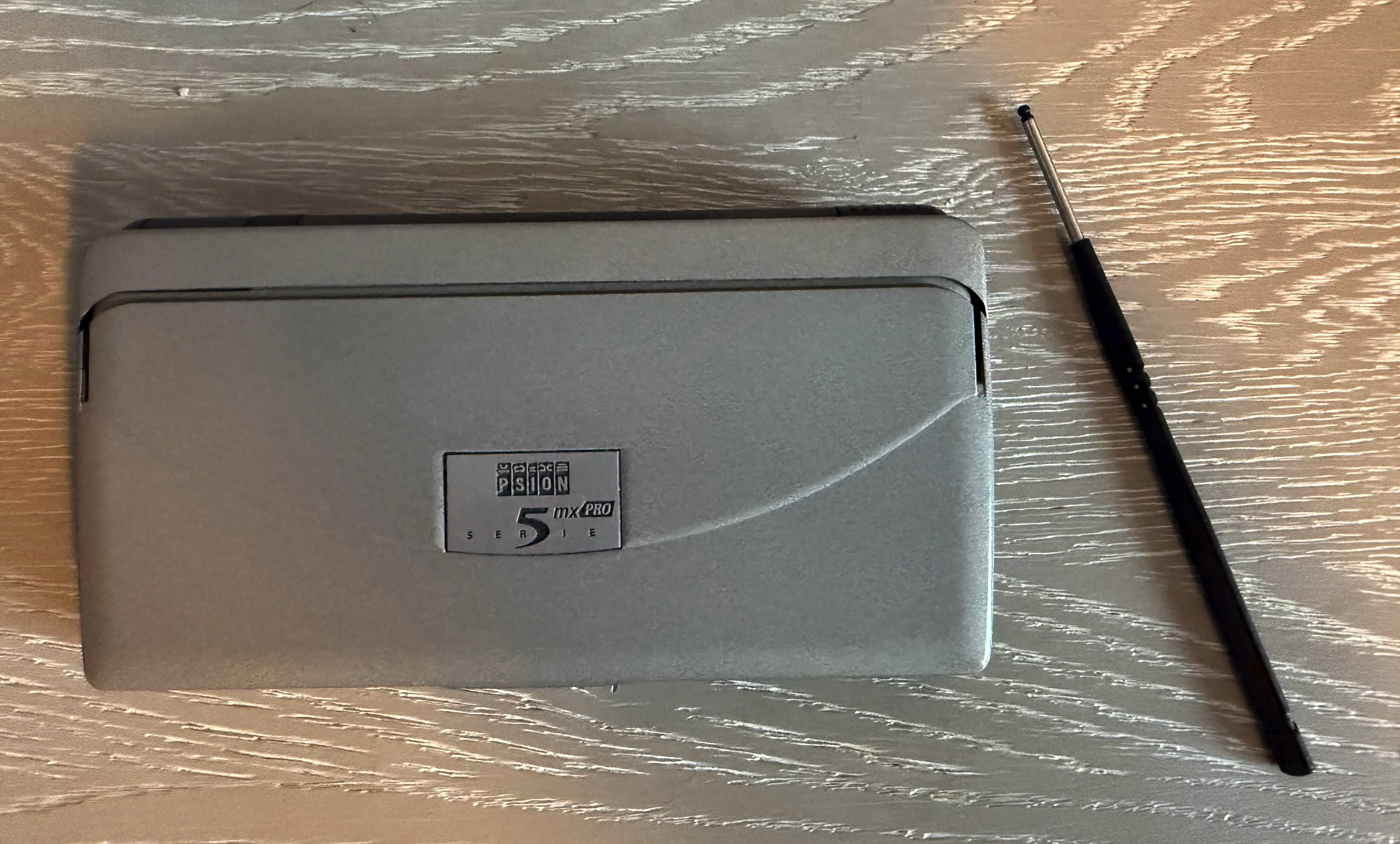
Peter C had kindly shared some photos of the 5mx he found and which is still working perfectly and the part that shines the most bright is that glorious keyboard. It was and to this day is magnificent, and is in my view one of the best computer products I have used in any format, and it will forever remain special to me.
I can’t write too much as I am not well at the moment, but one way to highlight how tech has moved on was the following which came from asking ChatGPT for a ‘review of the Psion 5mx’-
The Psion 5mx: A Revolutionary Device Ahead of Its Time
The Psion 5mx, released in 1999 by Psion PLC, was a palmtop computer that gained a devoted following for its advanced capabilities and superb design, both in hardware and software. Despite being over two decades old, it still holds a special place in the hearts of tech enthusiasts and historians of mobile computing. Its mix of innovative features and robust build quality made it one of the most iconic devices in the evolution of portable computing.
A Pocket-Sized Powerhouse
One of the key strengths of the Psion 5mx was its compact design, measuring just 6.9 x 3.5 inches and weighing around 350g. It was a palmtop computer in the truest sense, combining portability with a suite of productivity tools that rivaled many desktop computers of its era. At its core, the 5mx was powered by a 36 MHz ARM 710T processor and came with 16 MB of RAM, which might seem modest by today’s standards, but it was more than enough to handle most tasks efficiently in the late 1990s.
The device ran on EPOC, an operating system developed by Psion that was the precursor to Symbian OS, the platform that later powered millions of Nokia smartphones. EPOC was known for its stability, speed, and multitasking abilities, making the Psion 5mx far more versatile than its contemporaries in the handheld market.
The Keyboard: A Defining Feature
Arguably the standout feature of the Psion 5mx was its keyboard. Unlike many other handhelds that used touchscreens or clumsy keyboards, the 5mx featured a full QWERTY keyboard with excellent tactile feedback. Its unique folding mechanism allowed it to fit in such a small form factor, and it became renowned for its usability. The keyboard was so good that some users could type at near-desktop speeds, making the device ideal for writers, journalists, and business professionals who needed to type on the go.
Software and Functionality
The Psion 5mx wasn’t just about portability—it came with an impressive suite of applications, including a word processor, a spreadsheet, a database manager, and a time manager. These applications were designed to be fully functional yet light enough to run smoothly on the device’s limited hardware. Many professionals at the time used the 5mx as a serious productivity tool for writing, managing projects, and even programming.
The word processor, Psion’s native application called Word, was particularly loved for its robust feature set. It supported rich text formatting, tables, and spell-checking, making it a viable option for creating documents on the go. The spreadsheet, Sheet, was equally powerful, with features like macros and graphs.
The 5mx also supported PC synchronization, allowing users to transfer files and sync data with their desktop computers. This functionality made it a go-to device for many professionals who needed a reliable way to carry their work between locations without lugging a full laptop around.
Connectivity and Expansion
While the 5mx predated modern wireless technologies like Wi-Fi and Bluetooth, it offered several connectivity options through its RS-232 serial port and infrared (IrDA) port, which allowed for data transfer between devices. The serial port also enabled users to connect the Psion 5mx to modems and printers, adding to its versatility.
Additionally, the 5mx featured a CompactFlash (CF) card slot, allowing users to expand storage. CF cards were one of the more advanced storage solutions of the time, providing ample space for documents, applications, and even multimedia files.
Longevity and Cult Status
The Psion 5mx was discontinued in 2001, but its influence lingered for years. It became a cult classic among tech enthusiasts, particularly those who appreciated its combination of hardware and software design. To this day, second-hand units can be found on auction sites, and there’s an active community of fans who modify and upgrade the device to keep it relevant.
Even though the 5mx never achieved mass-market success like the PalmPilot or other PDAs of the early 2000s, it remains a beloved device due to its remarkable durability, usability, and the forward-thinking vision it embodied. In an era before smartphones dominated mobile computing, the Psion 5mx stood as an innovative alternative, bridging the gap between desktop productivity and mobile convenience.
Legacy and Impact
The Psion 5mx represents a pivotal moment in the evolution of portable computing. It was not just a reflection of Psion’s engineering capabilities but also an insight into what future mobile devices could offer. Its influence can be seen in later generations of mobile devices, from the keyboards of early BlackBerry smartphones to the software multitasking abilities found in today’s mobile operating systems.
While the Psion brand may have faded from the mainstream tech scene, the legacy of the Psion 5mx lives on, reminding us that even in the fast-paced world of technology, great design and functionality can transcend time.


I’ve recently returned to my Psion range, starting with the 5mx – they had been a-mouldering in the attic for 20 years, and had sadly suffered from some damp getting in, so I’ve been re-stocking the arsenal with stuff from eBay. The 5mx truly is an incredible machine, and works really well alongside my phone, which I can use for phone things, rather than computer things. Keyboard is 10/10 – nothing comes close (although I do find the old keyboard of the Series 3 range very usable). The screen is the main let-down – it needs fantastic light to be able to do much, and being that bit older, I need stronger glasses. It’s hard to see how a re-launch would conquer the mass market, but I really think this form factor (no, not some crappy keyboard effort) still has a place – same keyboard, e-ink screen, wifi, maybe a Raspberry Pi under the hood… (so it’s ergonomics, not just nostalgia that’s driving me!)
LikeLike
I agree. The form factor modernised could become a bit of a workhorse, but I suspect the majority will stick with phones as we know them now.
LikeLike