I do miss the Wild West days of cell phones, before we’d all settled on glass rectangles. It’s always fun to watch competing manufacturers trying to figure out the ideal form for a new thing, and it’s not the home… Read More ›

Retro
BBC Micro Elite source code
It covers the original BBC Micro cassette version, the enhanced BBC Micro disc version, the super-fast 6502 Second Processor version, the flicker-free BBC Master version and the cut-down Acorn Electron version, all of which were written by Ian Bell and… Read More ›
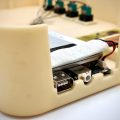
20 years of the iPod (a prototype)
Now, there are a lot of mysteries in the Panic Archives (it’s a closet) but by far one of the most mysterious is what you’re seeing for the first time today: an original early iPod prototype… More here. Some excellent… Read More ›
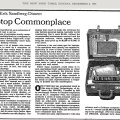
Making the Laptop Commonplace
“People don’t want to lug a computer with them to the beach or on a train to while away hours they would rather spend reading the sports or business section of the newspaper.” Full tweet is here. Kind of funny,… Read More ›
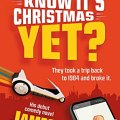
Do They Know It’s Christmas Yet?: They took a trip back to 1984 and broke it.
Thirty-somethings Tash and her brother Jamie didn’t mean to time travel back to October 1984, but bizarrely they did on the very day that Bob Geldof watched the BBC news report which moved him to form Band Aid and record… Read More ›
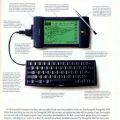
Apple’s biggest disaster
As disastrous as the Newton was from a business perspective I still look at it with some fondness. It feels ahead of its time in terms of how personal it was to use, but strangely for Apple it was much… Read More ›
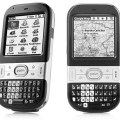
Remembering the Palm Centro
I remember the Palm Centro very well and after the Trio I was not impressed. I liked the Tree a lot, despite the well known memory problems, but the Centro was a plastic attempt to make the Tree more friendly…. Read More ›

Consoles of the ’70s
As the first home console ever, the Odyssey ran on batteries and games came on removable circuit cards, not cartridges. The Odyssey tragically lacked sound capability, but that was later rectified. Also looks uncannily like a defibrillator… More here. I… Read More ›

Recovering lost software
At the beginning of the home computer revolution, the humble compact cassette was far and away the most popular choice for microcomputer data storage, especially on the European continent. As a volunteer at the Museum of Computing, [Keith] was instrumental… Read More ›
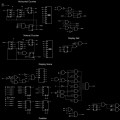
Pong decoded
Here the circuitry to display the score has been added. It uses a 7-segment LED decoder to convert the digits into segments that can be displayed on the screen with some logic. Some additional logic makes sure that the decoder’s… Read More ›
 McGST
McGST 